
The Sage Country and Its Wildlife
Silent SpringThis flow follows a grassland-improvement campaign as it disrupts relationships among sagebrush, wildlife, and livestock.
increasing Bearing strength in each event
 decreasing
Bearing strength in each eventdecreasingA Landscape Formed Slowly
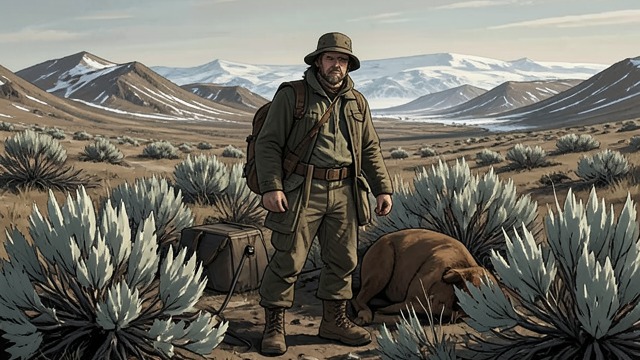
The Sage Environment
Adaptation to Extremes
On high plains with harsh winters, dry summers, and persistent winds, sagebrush became suited to local conditions. Its leaves retained moisture and remained available when other plants had disappeared.
More Than a Plant
The vegetation formed part of a habitat supporting animals adapted to the same climate. Carson presents the landscape as the result of long adjustment, not as an empty space awaiting improvement.
Animals Depend on Sage
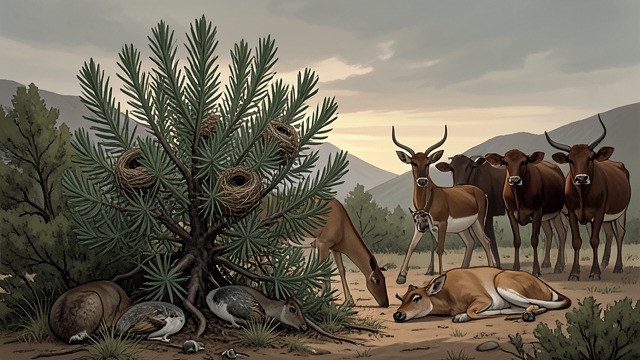
A Connected Habitat
Food and Shelter
Sagebrush sheltered nests and young sage grouse, provided year-round forage for pronghorn, and served other wildlife and livestock in winter. Different species used the plant in distinct but overlapping ways.
Mutual Relations
The animals were not incidental occupants of the range. Their lives and the vegetation’s renewal formed a system that supported both wildlife and human uses of the land.
Grassland Becomes the Goal
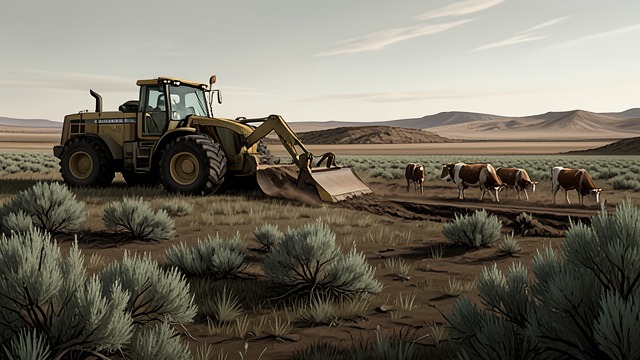
Improvement by Removal
A Single Measure of Value
Land agencies responded to pressure for more grazing by seeking grassland without sage. The plan treated the existing vegetation as an obstacle rather than as part of a functioning ecosystem.
Chemical Assistance
Machines and herbicides accelerated the campaign across millions of acres. Carson questions whether a dry region could sustain the desired grass without the moisture and shelter provided by sagebrush.
The Wildlife Cost
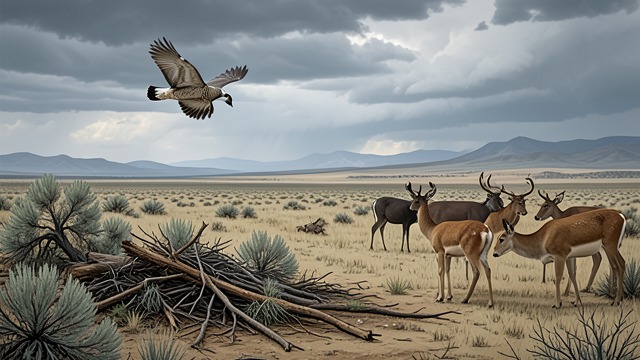
Habitat Disappears
Losses Beyond the Target
Killing sage also threatened sage grouse and pronghorn that depended on it. Deer and wintering livestock could lose forage when storms and snow made other food inaccessible.
A Misjudged Benefit
The plan measured success by the removal of a target plant, not by the condition of the whole range. Carson argues that even its intended beneficiaries could be harmed by simplifying their habitat.
A Question of Management
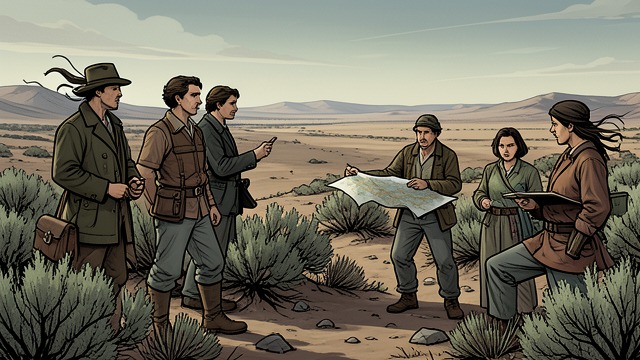
Reading the Land
Long Experience Versus Projection
People familiar with the range argued that grass grew better among and beneath sage than in bare replacement stands. The campaign’s long-term results remained uncertain.
Integrity as a Standard
The chapter asks land managers to respect the history and relationships that produced a landscape. The loss at stake is not just scenic variety but the ecological support on which wildlife and ranching depend.
Over the geological development of the western plains
Before large-scale sage eradication
During the expanding western range program
After repeated sage treatments began
Near the end of the sagebrush discussion
